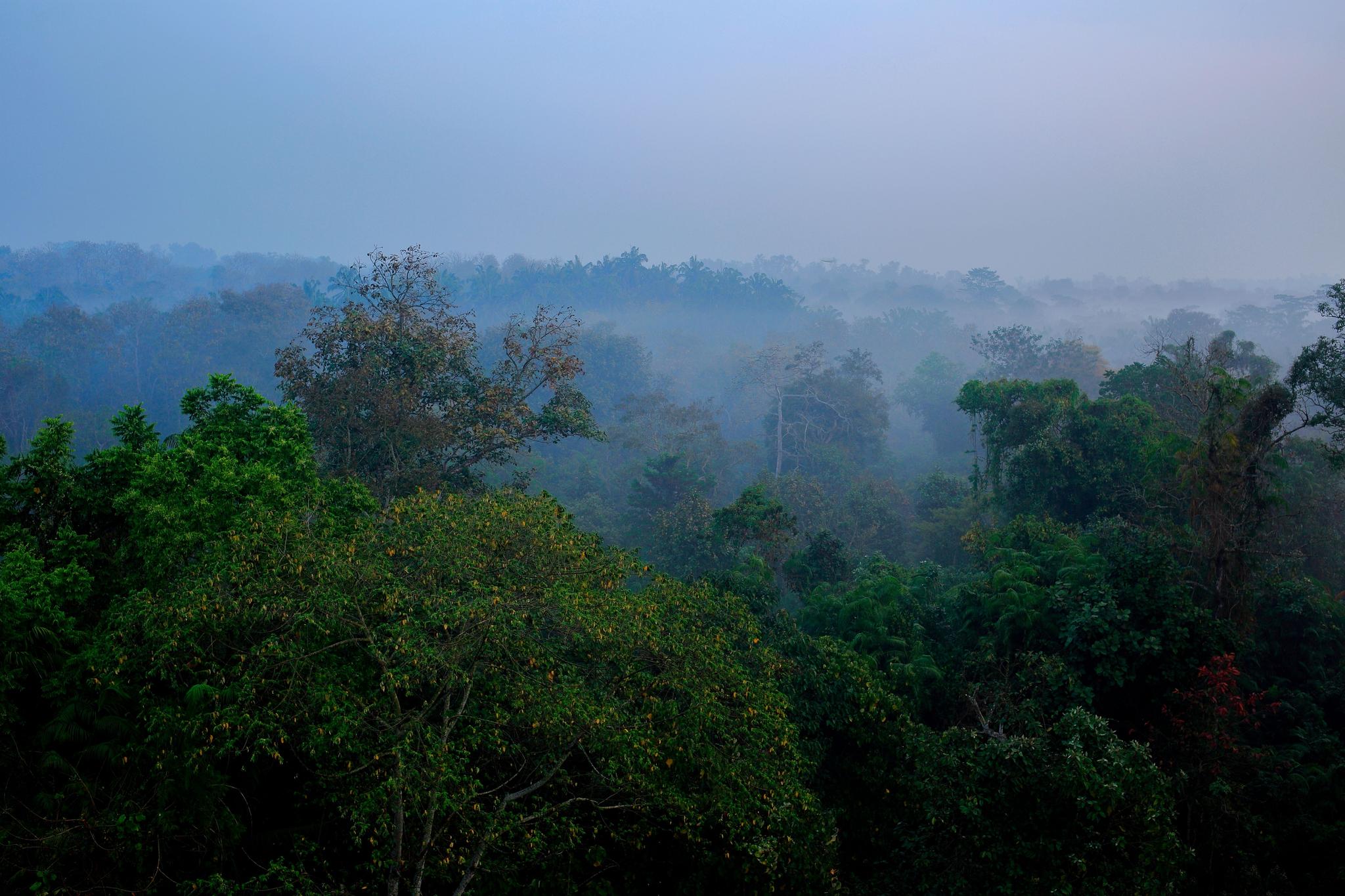
Challenges with Urban Civilization
Modern life has moved faster than our ability to live well in it. The more our cities expand, the less reliable the basics become — clean air, clean water, food we can trust.
Rainfall has turned unpredictable. Several Indian metros now register AQI readings well past 250 on an ordinary day. And much of what reaches our plates is grown with the help of chemical supplements, carrying heavy-metal residues and a fraction of the nutrition it once had.
Is this the development we have been working so hard towards? Farmers are selling the very land that once fed entire regions, handing it over to factories and apartment blocks instead. If this continues, where will the next generation find food worth eating?
Going back to our roots
The answer lies in reviving Vedic forest science — the deliberate, systematic way our ancestors built and protected forests. Regeneration was never left to chance: species were chosen with care and planted to a plan, until entire landscapes of forest took shape.
More than 70% of what people ate once came from these forests, known as Vanas, along with the fruits, vegetables and medicinal herbs they yielded. At the heart of Vanatvam's work is a commitment to bring this science back to life — afforestation farmland across Karnataka, planted as diverse, self-sustaining ecosystems rather than single-crop orchards.
Sacred groves, carried forward from Vedic forest science
We develop Vanas — mini-forest patches such as Nakshatra Vana, Panchavati Vana, Saraswati Vana and Navagraha Vana — drawing on Varahamihira's Brihat Samhita and other Vedic farming traditions, each one adding a spiritual dimension to the land. Water bodies run through these communities too, so the quiet of running water joins the rustle of leaves in giving every visitor a sense of being somewhere sacred.
Our reforestation farmland communities
This philosophy isn't an abstraction — it's the work already under way at Brindavana, Madhuvana, Anantavana and Eeshavana, our reforestation farmland communities.
At each site, we are restoring green cover one project at a time, planting a wide mix of native species to build what is, in effect, a seed bank — fruit, seed and nectar that birds and animals can carry back out into the surrounding landscape. A forest cannot be rebuilt overnight, but it can be planted and given the years it needs. Over time, we hope this quiet work helps the wider biodiversity of the Mysore–Maddur–Chamarajanagar–Kabini–Wayanad–Bandipur belt find its way back.
Managed farmland, within reach of Bangalore and Mysore
Vanatvam communities are designed as gated farm communities, so families get the privacy and settled safety of a planned neighbourhood while the Vanas take root around them. Each one sits within easy reach of Bangalore and Mysore — land you can be part of restoring, not just owning.
A community of like-minded custodians
A community of like-minded custodians
More than a gated address, Brindavana, Madhuvana, Anantavana and Ishavana are each a community of eco-conscious families who share one conviction: that land deserves as much care as it gives. Every family that joins becomes part of the conservation effort already under way here, with the shared goal of giving back to nature rather than simply taking from it.
Going back to our roots isn't nostalgia. It is a practical, grounded path to a greener, healthier life — for us, and for the generations that follow.
For more information, visit Vanatvam.com. Follow us on Facebook, Instagram, YouTube, X (Twitter) and LinkedIn.
Frequently Asked Questions
What is Vedic forest science?
Vedic forest science is the traditional knowledge our ancestors used to plan, protect and plant forests systematically. These forests supplied more than 70% of the food — fruits, vegetables and medicinal herbs — and sustained themselves with little intervention. Vanatvam is reviving these methods across its afforestation farmland projects in Karnataka.
Can non-agriculturists buy farmland in Karnataka?
Yes. Following the 2020 amendment to the Karnataka Land Reforms Act, individuals without an agricultural background can purchase agricultural land in the state, subject to the applicable rules and documentation. We recommend verifying your specific scenario with your legal advisor before purchase.
What makes Vanatvam different from other managed farmland near Bangalore?
Vanatvam focuses on reviving a whole ecosystem, built on Biodiversity-By-Design principles, rather than simply selling land. Each of our gated farm communities plants sacred groves — Nakshatra Vana, Navagraha Vana and others — alongside every farm holding, as part of a deliberate seed bank effort: land planted so birds and animals can carry native species back into a landscape that has lost much of its biodiversity.
Why is Vanatvam focused on restoring biodiversity in Kabini?
Kabini sits within a historic biodiversity hotspot, close to Wayanad and Bandipur, but decades of clearing have thinned its tree cover and diversity. Vanatvam's afforestation at Anantavana aims to rebuild that green cover as a seed bank — species that birds and animals can disperse naturally over time — in the hope that this helps the wider biodiversity of the region find its way back.
Where is Anantavana located?
Anantavana is located in Kabini, Karnataka — within a historic biodiversity hotspot close to Wayanad, Bandipur and the other towns along this forest belt. Visit Vanatvam.com for directions, plot availability and site-visit scheduling.