
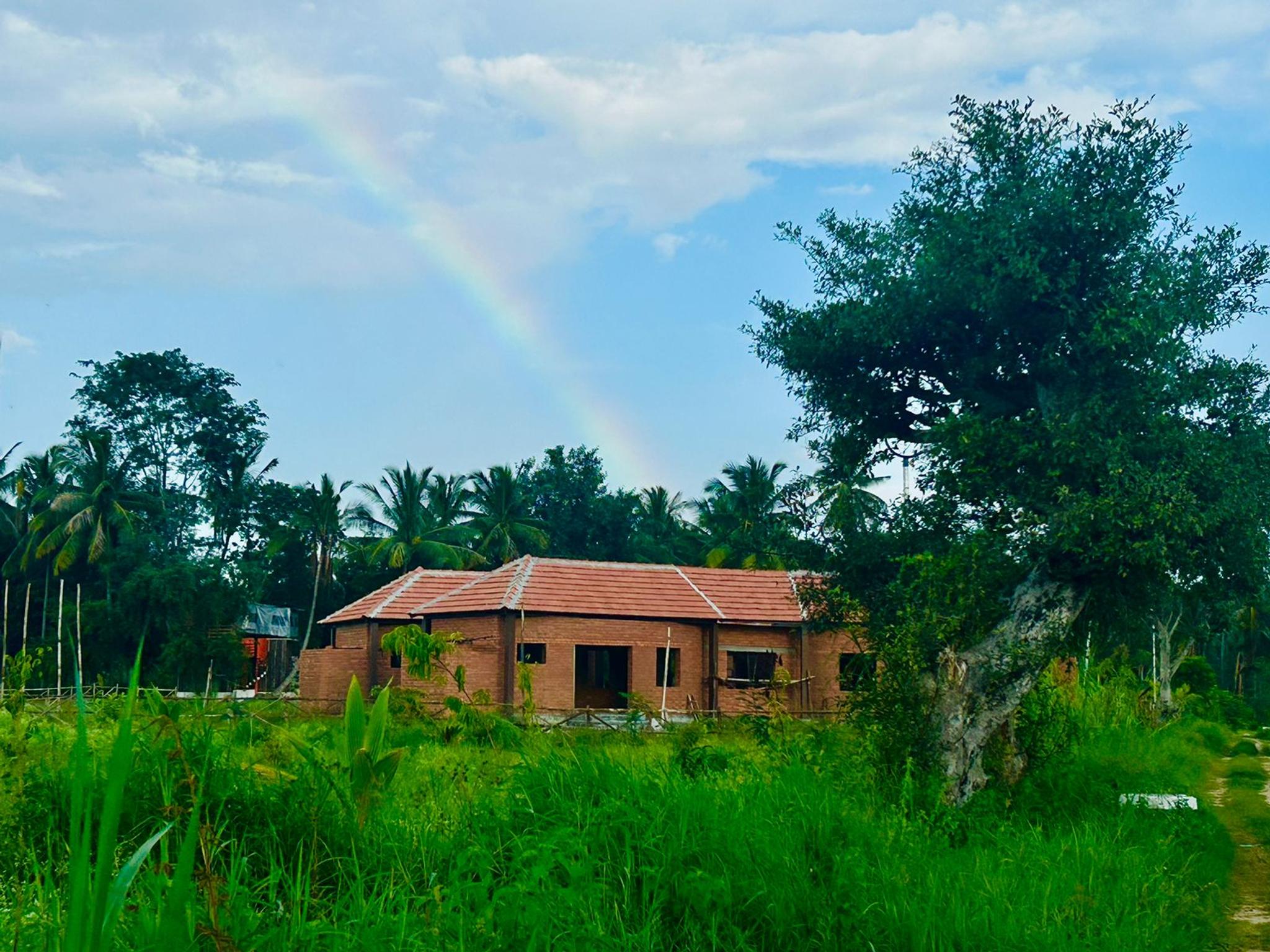
For us, the question of whether farmland is a good investment starts somewhere unexpected: not with a return percentage, but with what happens to the land itself after the sale is done. We think of ourselves as custodians of the land we develop, not simply its developers — managing our farm communities for the long term, season after season, not as a one-time plantation drive. That belief shapes everything else in this piece, including how we think the numbers should be read.
Farmland is increasingly discussed as one of India's fastest-growing asset classes, and people reasonably want to know: is it actually a good investment? The honest answer is that it depends on what you're comparing it against, and over what period — the same way it would for equity, gold, or real estate. Rather than repeat the large, uncited growth figures that circulate in public discussion, we've chosen to ground this in data we can point to. The IIM Ahmedabad–SFarmsIndia Indian School of Agriculture Land Price Index (ISALPI), one of the few organised benchmarks for Indian farmland, has tracked roughly 10% annualised growth since its base period of January 2019, alongside real volatility — including a sharp dip in 2021 (a disruption tied to the pandemic) and swings through 2023. That is a very different, more defensible picture than a blanket multiple, and it's the number we'd rather stand behind.
Within our own communities, prices at Brindavana, Madhuvana and Anantavana have risen by roughly 80–100% over a three-year period. That is our own observed experience at these specific communities, shaped by their location, design and the demand we've seen — not a projection, and not a guarantee of what any future purchase will do. As with any asset, past performance is not a promise of future returns, and we'd encourage you to treat it as one data point among several, not the whole picture.
What's Driving Demand for Agricultural Land
Until recently, Karnataka restricted who could buy farmland, and not everyone qualified. That has changed, and several other factors are now shaping demand for agricultural land in Karnataka:
1. The 2020 amendment to the Karnataka Land Reforms Act opened the market to buyers without an agricultural background, subject to the applicable rules and documentation.
2. Better rural roads and improved accessibility are making it genuinely convenient to step outside the city — a shift that supports demand for managed farmland near Bangalore.
3. Well-irrigated, arable land is becoming scarcer, which tends to support values for the land that remains well-managed and well-watered.
4. In uncertain economic conditions, more buyers are looking toward tangible, long-term assets rather than purely financial instruments.
5. Rising purchasing power among Indian investors has widened interest in alternative asset classes beyond the conventional mix of equity, gold and property.
How Farmland Compares With Other Asset Classes
The table below sets out broad, commonly cited long-term averages for different asset classes, alongside farmland. These figures vary by period, instrument, region and individual circumstances — they're meant to give a sense of scale for comparison, not a guarantee of what any specific investment will return.
Average Annualised returns across Asset Classes
Equity ~12–14% | Widely cited long-term index average; varies by index, period and source
Gold ~8–10% | Long-term average; moves with global price cycles
Debt / Fixed Deposits ~6–7% | Based on prevailing FD and debt-instrument rates; varies by issuer and tenure
Residential Real Estate ~5–8% | Varies significantly by city, locality and holding period
Farmland (ISALPI)† ~10% | Annualised since the index's January 2019 base; includes real YOY volatility
* Equity, gold, debt, residential real estate and FD figures are broad market averages widely cited in financial commentary and will vary by period and source; please verify current rates with your financial advisor.
† Source: IIM Ahmedabad / SFarmsIndia, ISALPI December 2024 Release — approximately 10% annualised growth since the index's January 2019 base, with meaningful period-to-period volatility.
‡ Agricultural income has historically been treated as exempt under Section 10(1) of the Income Tax Act, but the exact tax treatment — including capital gains on a sale — depends on how a specific parcel is classified and other individual factors. We'd recommend confirming your own tax treatment with a qualified tax advisor before you buy.
Why We Think the Land Itself Matters as Much as the Numbers
A number on a chart doesn't tell you much about what's actually happening on the ground. We believe the durability of farmland's value has a lot to do with how the land itself is cared for. A holding planted with only fruit-bearing trees is an incomplete ecosystem — something still has to feed the soil, fix nitrogen, and shelter the pollinators that keep those very trees productive. This is Biodiversity By Design: intentional, mixed-species planting that keeps soil healthy and an ecosystem functioning, rather than a single crop slowly drawing down what the land has to offer. Land cared for this way is land we believe is more likely to hold its value over the long run — not because it is risk-free, but because it isn't being quietly depleted.
This is also why we think of ourselves as custodians of the land we develop, not simply its developers. Managing our farm communities for the long term — season after season, not a one-time plantation drive — is a goal our whole community of founders, farm owners and partners holds together, and the reason Vanatvam exists in the first place. It is a more demanding path than planting once and walking away, and it's one we take pride in.
In Summary
Growing demand, tightening supply of well-irrigated land, and a historically exempt tax treatment on agricultural income all make farmland worth a serious look alongside other asset classes in a diversified portfolio. We'd stop short of calling any single asset class an “all-weather” option — every investment carries its own risks and depends on individual circumstances. What we can say with more confidence is that land managed with biodiversity by design, and with a long-term view, is the kind of farmland many folks are aspiring to own.
For more information, visit Vanatvam.com.
Want a quote? Email us at info@vanatvam.com.
Follow us on socials: Facebook, Instagram, X (Twitter), LinkedIn, YouTube.
Frequently Asked Questions
Is farmland a good investment in India?
Farmland has delivered roughly ~10% annualised growth since 2019 according to the IIM Ahmedabad–SFarmsIndia ISALPI index, alongside real year-to-year volatility. Like any asset class, how it performs for you depends on the specific land, how it's managed, and your own investment horizon — we'd recommend treating it as one part of a diversified portfolio, and weighing it against the stewardship and lifestyle value the land itself offers.
Is agricultural income tax-exempt in India?
Agricultural income has historically been treated as exempt under Section 10(1) of the Income Tax Act. The exact treatment, including how capital gains on a sale are handled, depends on how the specific parcel is classified and other individual factors, so we'd recommend confirming your own position with a qualified tax advisor.
Can a non-agriculturalist buy farmland in Karnataka?
Yes. Following the 2020 amendment to the Karnataka Land Reforms Act, individuals without an agricultural background can purchase agricultural land in the state, subject to the applicable rules and documentation. We recommend verifying current requirements with your legal advisor before purchase.
What does “biodiversity by design” mean for land value?
It means planting intentionally for a functioning ecosystem — not just fruit-bearing trees, but the species that feed the soil, fix nitrogen and support pollinators. We believe land managed this way is better placed to hold its value over the long term, because it isn't being steadily depleted the way a single-crop plantation can be.
Has farmland at Vanatvam's communities appreciated in value?
Prices at Brindavana, Madhuvana and Anantavana have risen by roughly 80–100% over a three-year timeframe. This is our own observed experience at these specific communities and not a projection or a guarantee — past performance doesn't predict future returns, and individual outcomes will vary. What we can say with more confidence is that it's land we've cared for as custodians, not simply developed and left behind.